
Category placement was inconsistent
Same products appeared under different categories depending on which platform you used
Users kept getting lost. But the navigation patterns were a symptom of the source, not the surface.
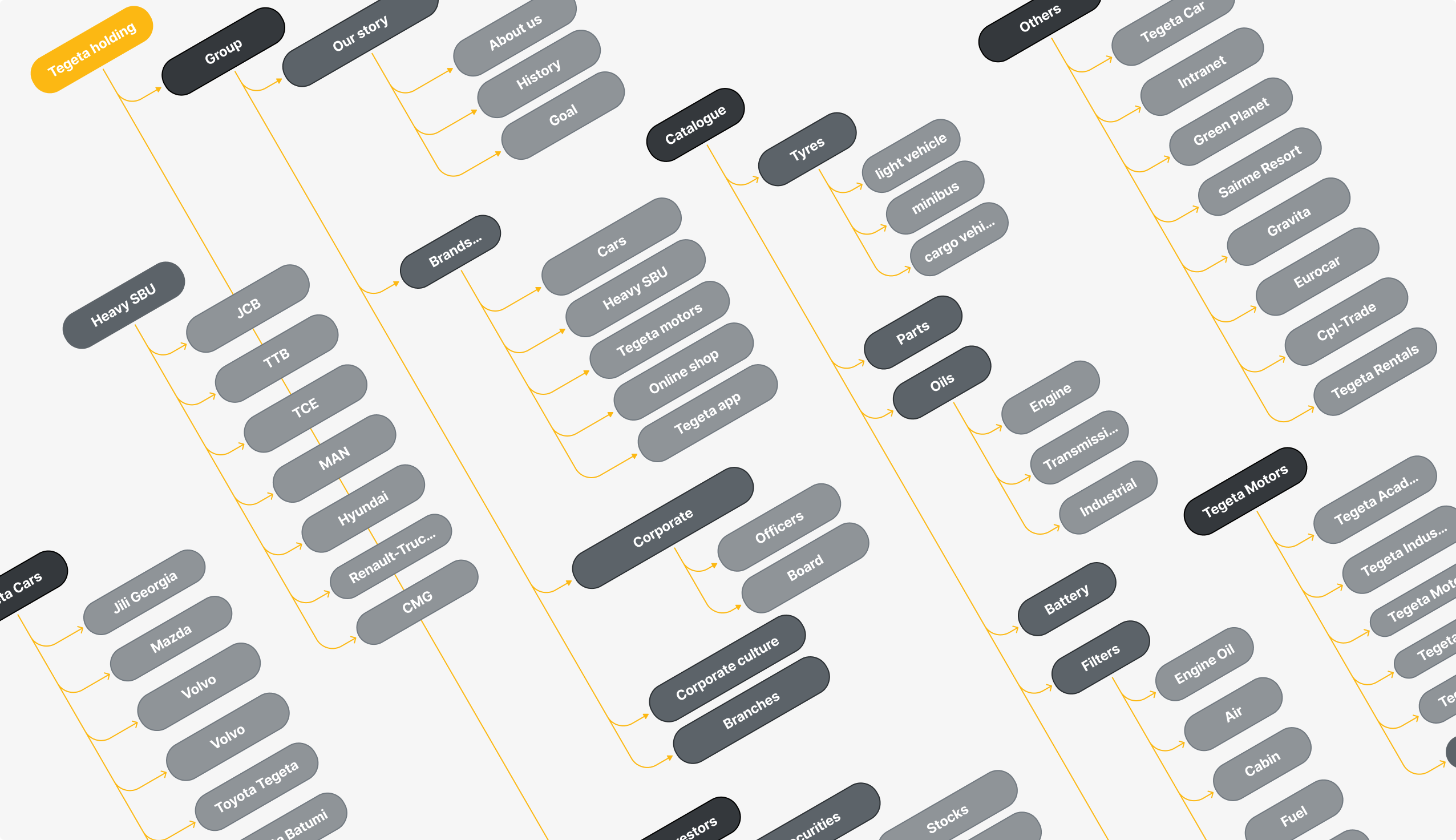
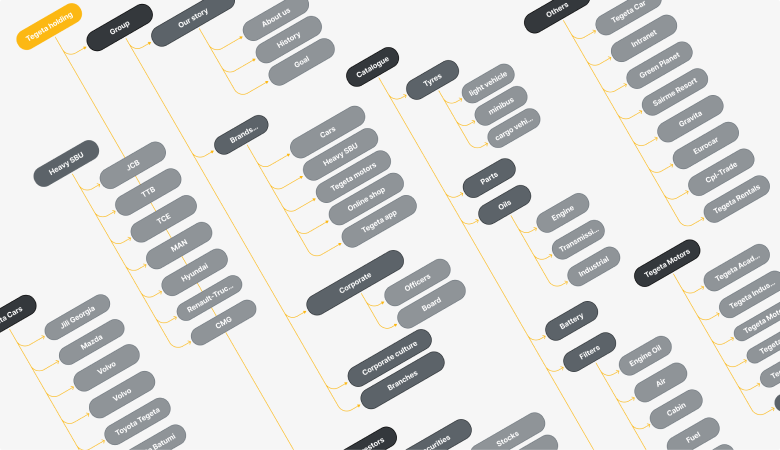
When I ran usability interviews across the ecosystem, users were dropping off not because the UI was confusing, but because they landed in the wrong place to begin with. A user looking for tires ended up in accessories. Someone trying to book a service didn't realize booking existed. The navigation assumed users understood how Tegeta was organized internally. They didn't, and they shouldn't have to.
The deeper problem was that each platform had grown its own navigation logic independently. Retail, B2B, and the service platform shared no structural model. Category placement was inconsistent across surfaces. Navigation depth varied unpredictably. The same action,finding a part, checking an account,worked differently depending on which platform you were on.
Same products appeared under different categories depending on which platform you used
Some paths required two clicks, others five,with no logic connecting the difference
Authentication was implemented differently in each product,same user, different experience
Users lost context completely when moving between retail, B2B, and service booking
To understand the breakdown I conducted a structural audit across the ecosystem. I mapped fit-to-mapping issues (how well navigation matched the tasks users actually came to do), cross-domain boundary problems (what happened when a user needed to move between platforms), and resource identification failures (how consistently users could find what they were looking for).
The ecosystem needed a shared architectural model, not cloud policies, but a real structural foundation that could hold consistent decisions across surfaces.
The ecosystem needed a shared architectural model,not cloud policies, but a real structural foundation that could hold consistent decisions across surfaces.

I standardized vocabulary across platforms, one set of terms for categories, documents, and account structures. I built a consistent location and account framework so the same user felt recognized everywhere. And I designed a navigation system that was organized around what users were actually trying to do, not around Tegeta's internal org structure.
I standardized vocabulary across platforms,one set of terms for categories, documents, and account structures. I built a consistent location and account framework so the same user felt recognized everywhere. And I designed a navigation system that was organized around what users were actually trying to do, not around Tegeta's internal org structure.
A consistent top-level structure applied across all platforms, same labels, same logic, same hierarchy wherever a user landed.
A consistent top-level structure applied across all platforms,same labels, same logic, same hierarchy wherever a user landed.
Within each platform, navigation adapted to the specific task at hand, deeper categories, related services, relevant shortcuts, without breaking the global model.
Within each platform, navigation adapted to the specific task at hand,deeper categories, related services, relevant shortcuts,without breaking the global model.
Individual account and order management consolidated into a single panel, connected across platforms so users had one place to manage everything regardless of which Tegeta product they were in.
Individual account and order management consolidated into a single panel, connected across platforms so users had one place to manage everything regardless of which Tegeta product they were in.
When I retested navigation with users after the redesign, drop-off from wrong destinations stopped being a recurring failure mode. Users moved between purchasing and booking without losing their context. The structure became something users could learn once and apply everywhere, which is exactly what navigation should do.
When I retested navigation with users after the redesign, drop-off from wrong destinations stopped being a recurring failure mode. Users moved between purchasing and booking without losing their context. The structure became something users could learn once and apply everywhere,which is exactly what navigation should do.