
Retail Shop,From Online Store to Integrated Retail System
Tegeta's online shop was the entry point to the ecosystem,and the most isolated part of it.
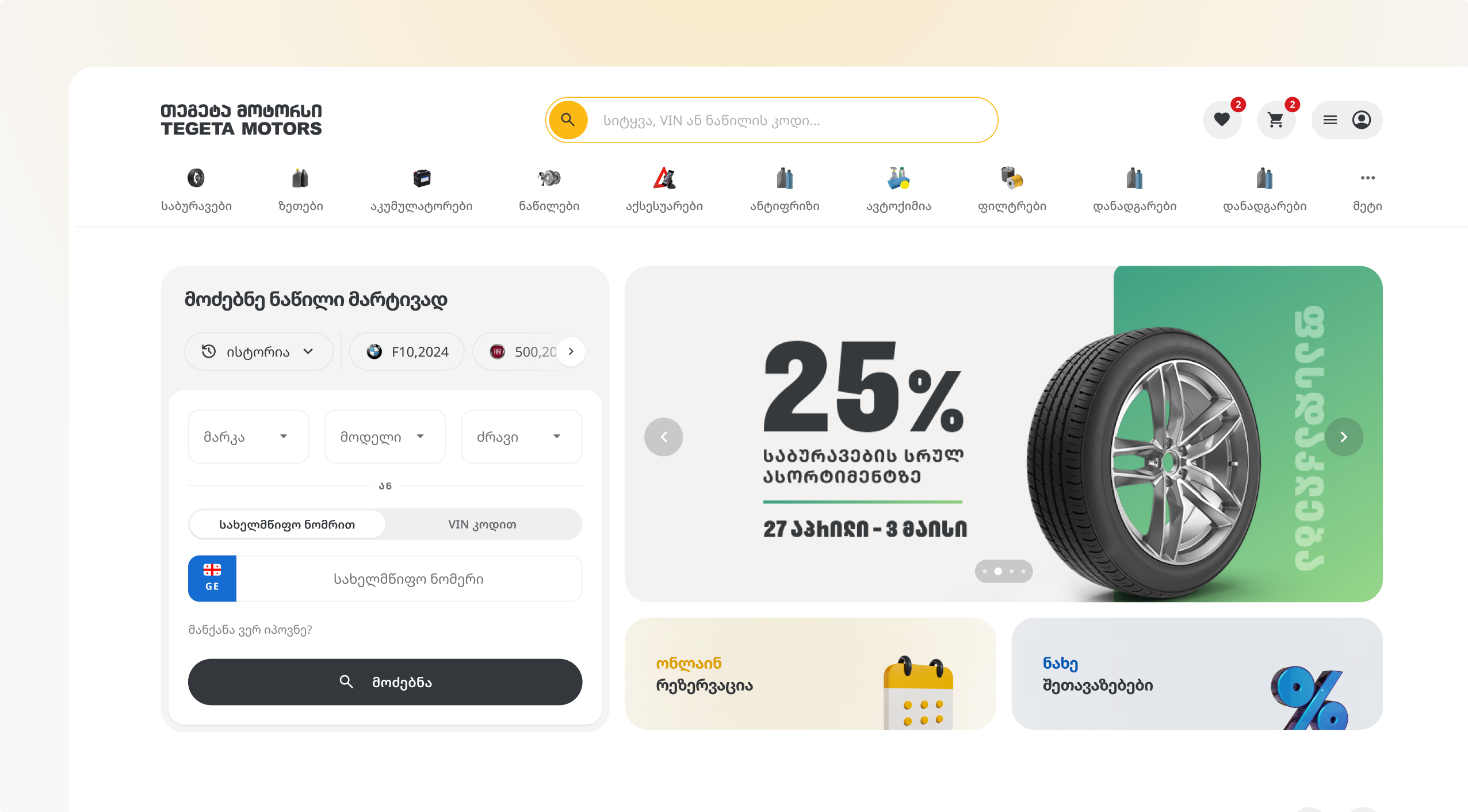
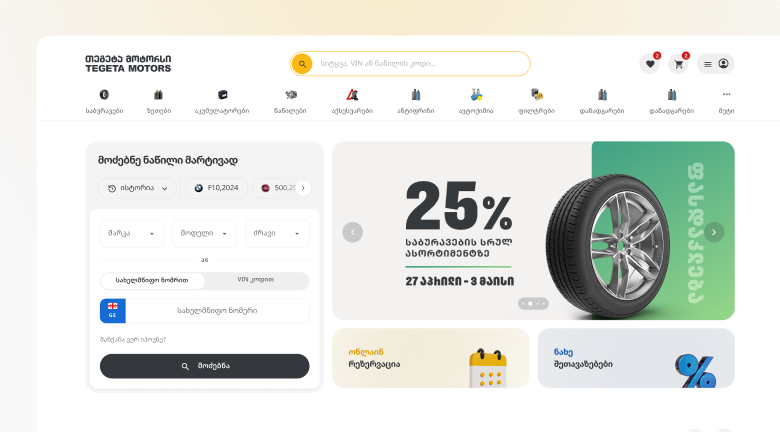
Where users actually failed
Tegeta's primary business is car parts. Their online shop existed, but usability interviews revealed that users were consistently failing at the core task: finding the right part for their car. The catalogue was built around an old Russian reference format,a legacy system that even automotive professionals found confusing. Most users simply gave up.
A decision had already been made before I joined to move to an Autodoc-style catalogue,European, modern, simple. You enter your car's year, make, model, and engine type, and the system shows you parts that are guaranteed to fit. My job was to design an experience around that new logic.
But finding the right part was only half the problem. After purchase, users had no path forward. Tegeta's service centers could install the part,but the booking platform was a completely separate product with no connection to the shop. The purchase journey ended at the confirmation screen. The natural next step didn't exist.
A user who just bought brake pads shouldn't have to start over from scratch to book an installation. The shop was producing transactions. It should have been starting relationships.
A user who just bought brake pads shouldn't have to start over from scratch to book an installation. The shop was producing transactions. It should have been starting relationships.
Three decisions that changed the flow
Buy → Install
I connected the purchase flow directly to service booking. After adding a part to cart, the path to scheduling installation was visible and natural,not buried in a separate platform. Purchase became the beginning of a service journey, not the end of a transaction.
Unified Identity
No separate accounts per platform. A purchase in the retail shop recognized the same customer profile that existed in the service platform. One account, full context, carried across every Tegeta surface.
Intent-First Navigation
Navigation organized around what users were actually looking for,Tires, Oils, Accessories, Back by Brand,rather than Tegeta's internal category structure. Users shouldn't need to understand how the warehouse is organized to find what they need.

What the redesign required
Connecting retail to service wasn't just a design decision,it required real coordination between systems. Product-to-service mapping had to be maintained as an explicit architectural connection, not assumed. Location logic had to match the service center network. Inventory compatibility had to align with what service centers could actually install.
The UI changes followed from those structural decisions. They couldn't have existed without them.
After testing
Post-redesign usability interviews showed a significant improvement. Users found parts faster, understood the path from purchase to installation, and experienced the shop as a connected system rather than a dead end. The maintenance history step,a persistent record of what a customer owned and had serviced,turned a one-time transaction into the foundation of an ongoing relationship.